ServicesCeramic Window Film
Ceramic Window Film in Katy
Ceramic window film rejects a large share of the sun's heat while keeping your glass clear. Rooms stay cooler, furniture fades slower, and nothing looks mirrored from the street. We measure your windows, check your glass and walk you through the right film for each room.
What ceramic film does and when it makes sense
Ceramic film is made with tiny ceramic particles instead of metal. Those particles block infrared light, which is the part of sunlight you feel as heat. Visible light still comes through, so a room can stay bright while the glass stops cooking it.
Because there's no metal in it, ceramic film won't interfere with cell phones, Wi-Fi or smart home devices. It also has low reflectivity. From outside, your windows look close to how they look now.
Pick it if your main goals are a cooler room and less UV fading, and you'd rather skip the dark, shiny look of older films. West-facing rooms in Katy that turn into ovens by late afternoon are where most people notice the difference first. If privacy matters more to you, our privacy window tinting page covers darker and frosted options.
What's included with every ceramic film job
Glass check before we quote
We look at each window to see if it's single-pane, dual-pane, low-E or tempered. Some glass needs a specific film grade to avoid heat stress. We tell you up front if a window isn't a good fit.
Film samples in your own light
We hold samples up to your actual windows. You see how each shade looks in that room at that time of day, not in a brochure.
Written, line-item quote
Each window or group of windows is listed with its film and size. You know what you're paying for before any work starts.
Old film removal
If there's peeling or bubbled film on the glass, we strip it and clean off the adhesive before the new film goes on.
Protected floors and sills
We lay down towels and drop cloths at every window. When we leave, the work area is wiped down and the scraps are gone.
Signs ceramic film is worth a look
One room is always hotter
The AC runs fine, but one bedroom or the living room never cools down in the afternoon. That's usually sun through the glass.
Glare on screens and the TV
You close the blinds every afternoon just to see a screen. Ceramic film cuts glare while letting you keep the blinds open.
Fading floors and furniture
Wood floors, rugs or a couch show a lighter patch where the sun hits. UV is doing that, and ceramic film blocks most of it.
You tried dark film and hated it
Some older films made rooms gloomy or turned windows into mirrors. Ceramic film gives you heat control with a much lighter look.
Weak signal near the windows
Metallized film can hurt phone reception. If that's been a problem, ceramic film avoids it.
How install day goes
- 1
Prep the room
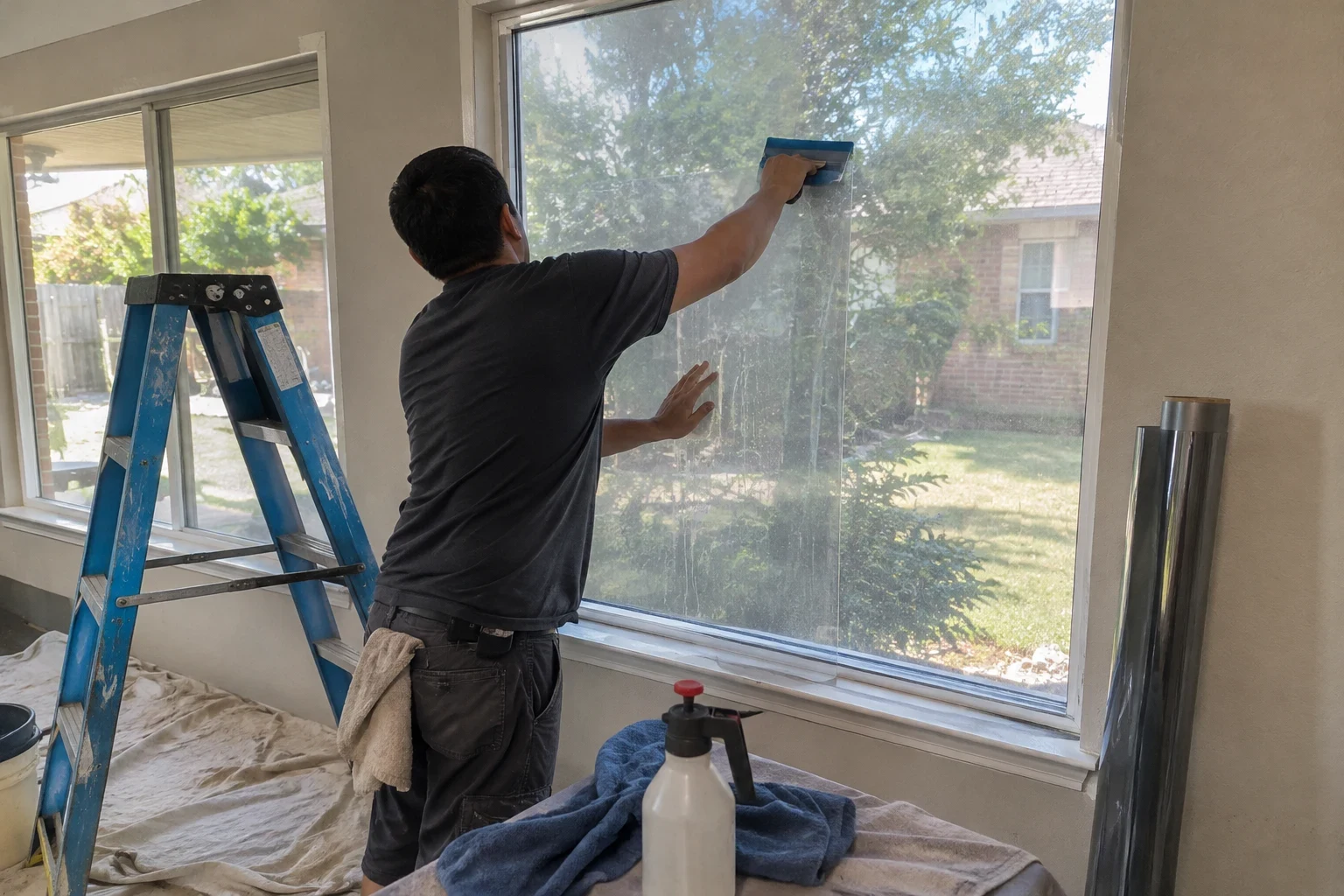
We move what's near the windows, lay down covers and take down blinds where needed. You don't have to empty the room.
- 2
Deep clean the glass
Every pane gets scraped and cleaned edge to edge. Dust left under the film shows up as specks, so this step takes time.
- 3
Apply and squeegee
The film goes on wet with a slip solution so we can position it. Then we squeegee the water out and trim the edges with a small gap so the film doesn't lift.
- 4
Walk-through and care tips
We check every window with you. Light haze or small water pockets are normal for the first few weeks while the film cures. We'll tell you how long to wait before cleaning the glass and what to clean it with.
What moves the price of ceramic film
Ceramic film costs more than basic dyed film because of what it's made of. The total depends mostly on how much glass you have and how easy it is to reach. We give you a written quote after we've seen the windows, so the number doesn't change on install day.
- Square footage of glass
- More glass means more film and more labor. A few large patio doors can match a whole row of small bedroom windows.
- Film grade and shade
- Ceramic film comes in several levels of heat rejection. Higher-performance grades cost more, and we'll tell you where the upgrade actually pays off.
- Access and height
- Second-story windows, transoms above doors and tall living room glass need ladders or extra setup time.
- Old film on the glass
- Removing old film and its adhesive is extra labor. Some old film comes off clean, and some takes a while.
- Glass type
- Dual-pane and low-E glass can limit which films are safe to use. That sometimes changes the film we recommend.
Ceramic film questions we hear
Something not covered here? (281) 824-1833
Will ceramic film make my house dark?
Not unless you want it to. Ceramic film comes in light shades that still block a good amount of heat. We'll show you samples on your own windows so you can judge for yourself.
Is it safe for dual-pane windows?
Usually, yes, with the right film. Some dual-pane and low-E glass can build up heat stress with the wrong product. We check your glass first and only recommend a film that suits it.
Will it hurt my cell or Wi-Fi signal?
No. Ceramic film has no metal in it, so it doesn't block phone or wireless signals the way metallized film can.
Will insurance pay for ceramic film?
A film upgrade on its own usually isn't a claim. If a storm breaks a window that already had film, your policy may cover putting back what was there. We can take photos and give you a line-item estimate to share, but your adjuster makes the call on coverage.
How long does install take?
Most homes are done in a day. Larger homes or jobs with old film removal can take longer. We'll give you a realistic time when we quote.
Do you install ceramic film for businesses too?
Yes. Offices and storefronts use it for heat and glare control without a mirrored look. Our commercial window tinting and office window tinting pages cover those jobs in more detail.
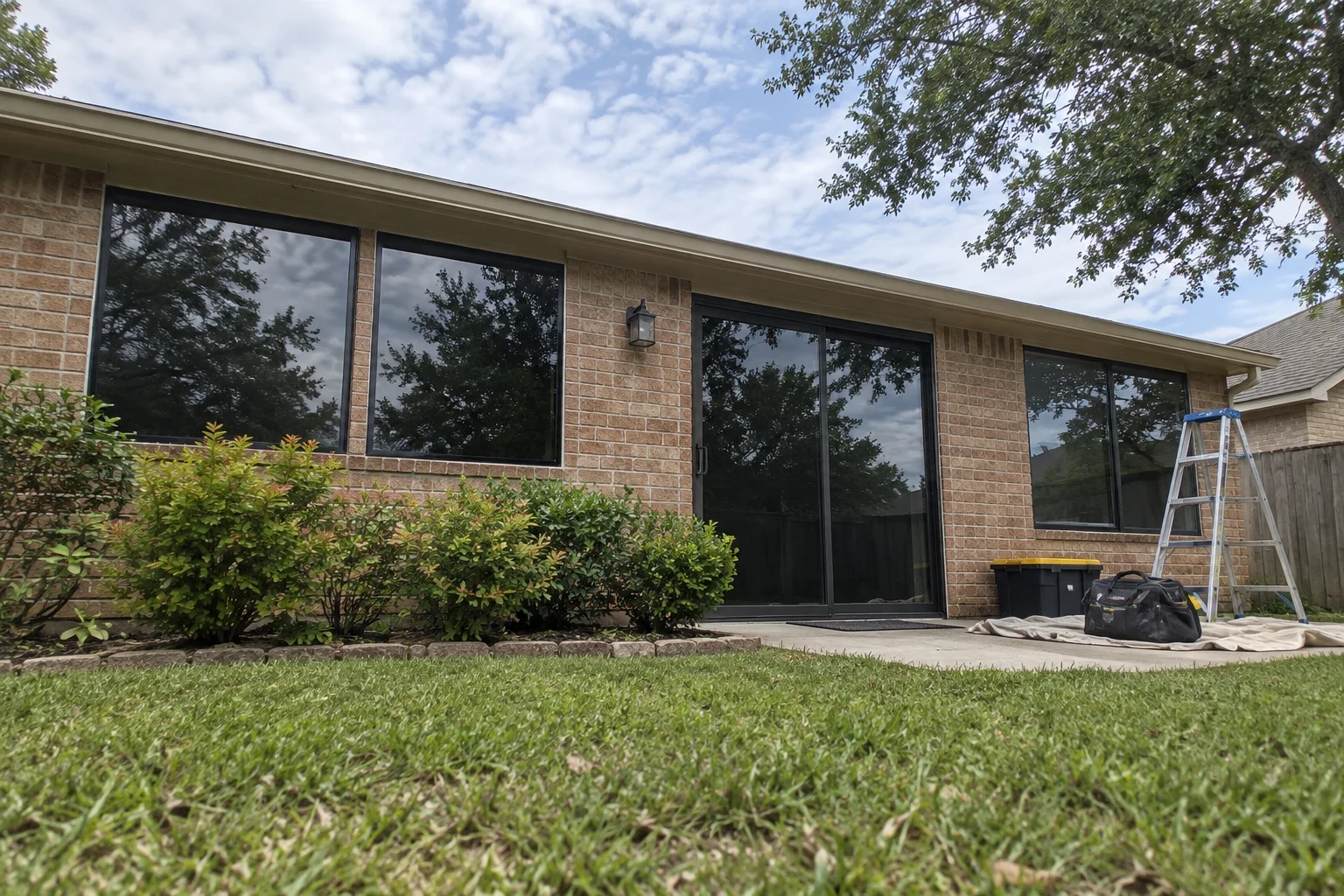
Find out what ceramic film would do for your rooms
Tell us which rooms run hot and we'll set a time to look at the glass. We serve Katy and nearby towns like Cinco Ranch, Fulshear and Richmond.