ServicesNon-Reflective Window Film
Non-Reflective Window Film in Katy
You want cooler rooms and less glare, but you don't want shiny windows or a dark, tinted look. Non-reflective window film keeps the glass looking close to plain glass while it cuts heat and blocks UV. We measure, explain your options and give you a straight price.
What Non-Reflective Film Does and When It Fits
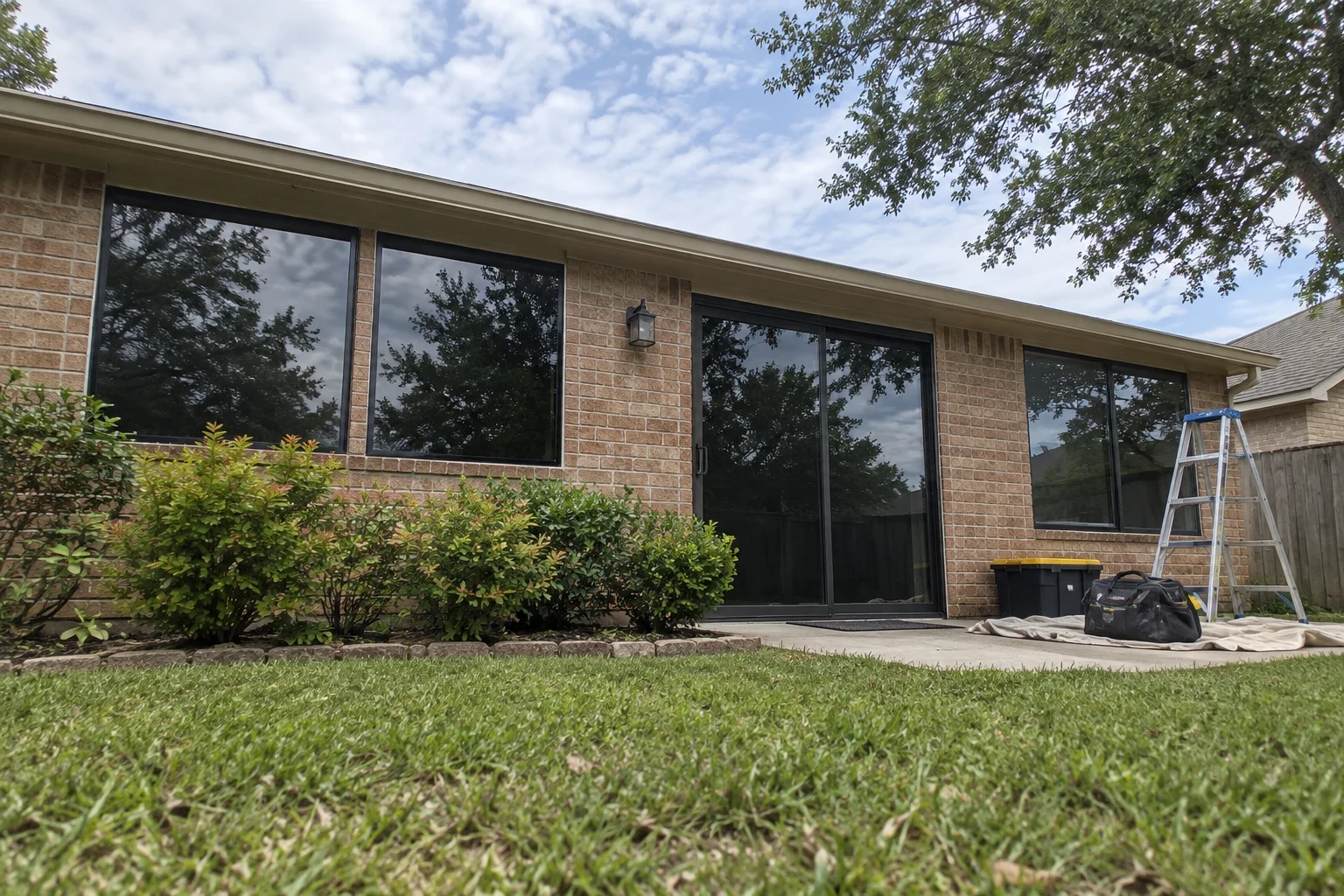
Most window film works one of two ways. Some films bounce heat back with a metal layer, which gives that mirror shine. Non-reflective films, mostly ceramic and carbon types, absorb and block heat instead. From the street your windows look normal. From inside, you don't see your own reflection at night.
This is the right call when the look of the house or building matters. It suits people with HOA rules against mirrored glass, rooms with a view you want to keep true in color, and offices where staff stare at screens all day. In Katy, west-facing rooms take a beating every summer afternoon, and this film takes a real bite out of that heat without changing how the windows look.
It is not a daytime privacy film. If you need people outside to stop seeing in, look at our privacy window tinting or reflective window film pages. We will tell you plainly which one does the job you need.
What the Job Includes
- A look at your glass first
- We check whether each window is single pane, dual pane or low-E. Some glass needs a specific film to avoid heat stress cracking, so we match the film to the glass, not the other way around.
- Samples tried on real windows
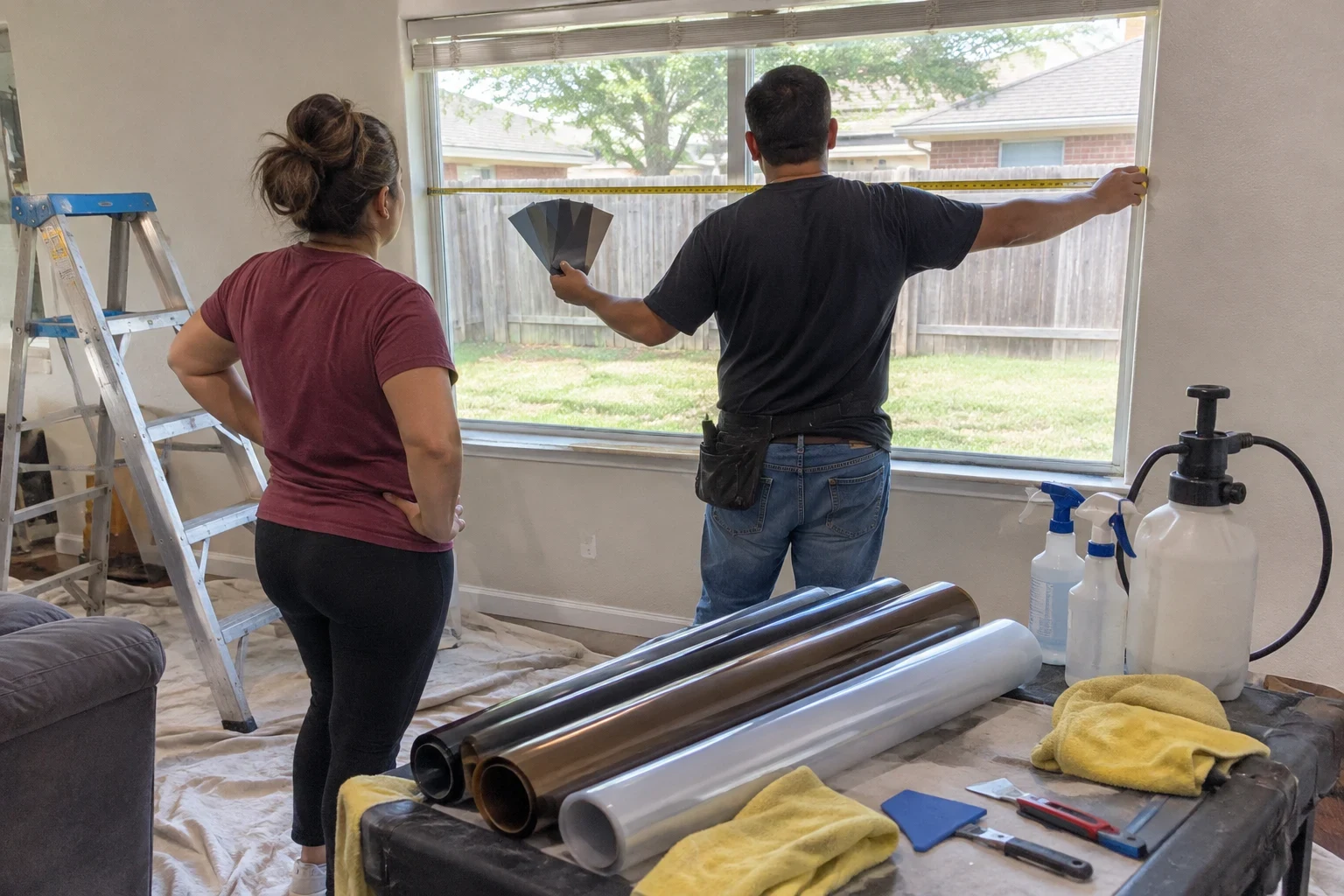
- We press small film pieces against your actual panes, so you judge the tint and how clear it looks with the sun that room really gets. A photo on a screen won't show that.
- Written, line-item quote
- You get a price broken out by window or room. No lump sum you have to guess at.
- Careful prep and install
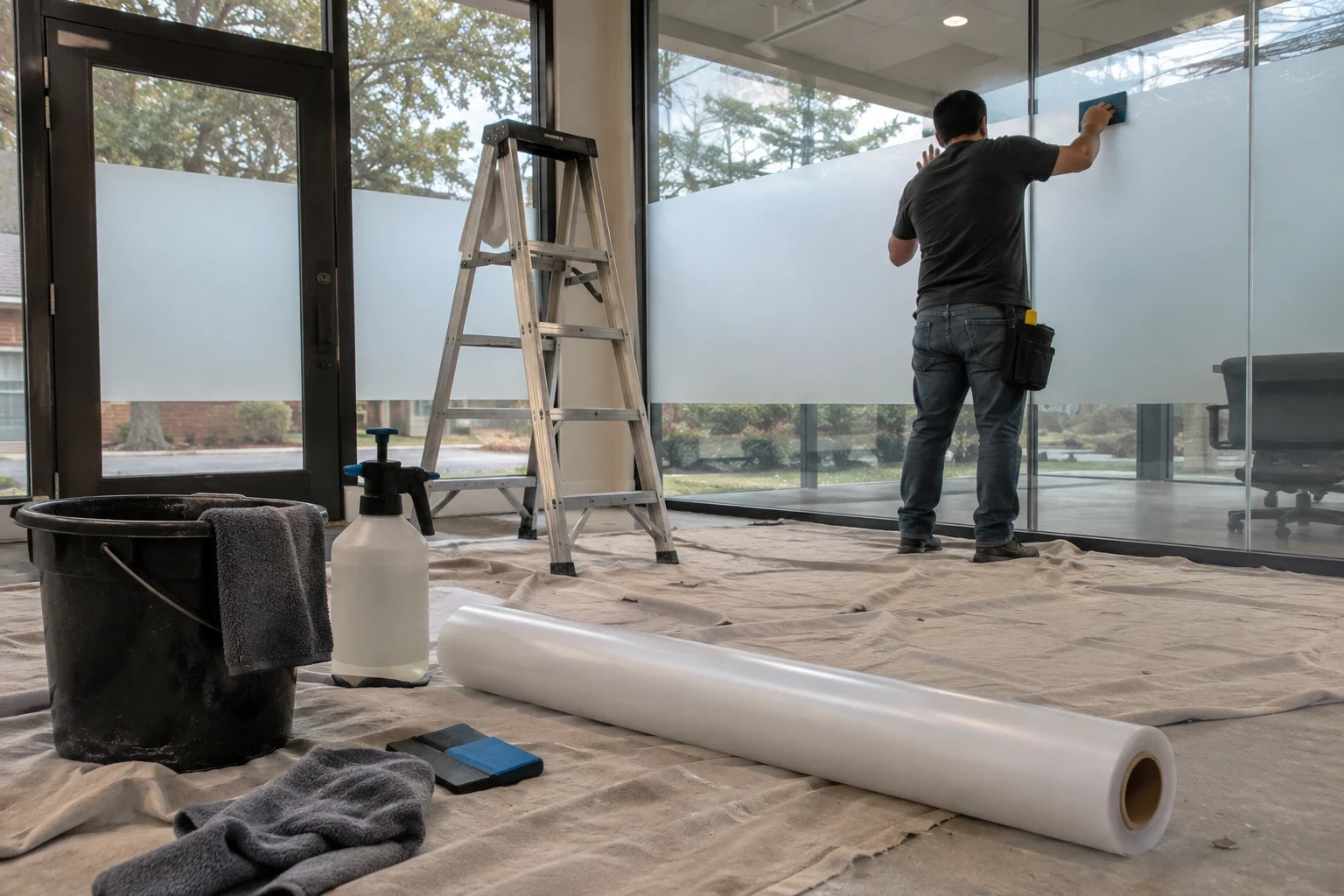
- We clean every pane, trim the film to fit with a small gap at the edges, and squeegee out the water. Floors and sills get covered while we work.
- Old film removal
- If you have peeling, purple or bubbled film, we strip it and clean off the adhesive before new film goes on.
- Cleanup and care notes
- We haul off scraps and wipe down the frames. Before we leave, we tell you how long to wait before cleaning the glass and what to use.
Signs Non-Reflective Film Is What You Need
Hot rooms in the afternoon
One side of the house or office runs several degrees warmer and the AC never catches up. Ceramic non-reflective film cuts a good share of that solar heat.
Glare on screens and TVs
If you close the blinds every day just to see a monitor, film lets you keep the light and lose most of the glare.
Faded floors and furniture
Rugs, wood floors and fabric fading near the windows point to UV. These films block nearly all of it.
HOA or building rules
Many neighborhoods and office buildings don't allow mirrored film. A low-reflectivity film usually passes, but we always suggest you check your rules first.
You hate the mirror look at night
Reflective film can turn windows into mirrors after dark from inside. Non-reflective film keeps your view out at night.
How Install Day Goes
- 1
Free quote by phone, then a visit
You tell us which rooms bother you and why. We set a time to come measure, check the glass and show samples.
- 2
Prep the room
We move small items off sills, lay down drop cloths and clean the glass. Any speck left on the glass ends up under the film, so this step takes time.
- 3
Apply the film
Film goes on wet so we can position it, then we press the water out and trim the edges. A typical house of windows is usually done in a day.
- 4
Walk-through and curing
We look at every window with you before we leave. Some haze or small water spots are normal for the first few weeks while the film cures. They clear on their own, faster in warm weather.
What Moves the Price
We don't quote over the phone sight unseen, because the glass and the access change the number. What we can do is tell you what drives it. Then you get a written price after we measure.
- Glass area and window count
- More square feet means more film and more labor. Lots of small panes with grids take longer than a few big sheets of glass.
- Film grade
- Ceramic films cost more than carbon or dyed films, but they reject more heat while staying clear. We show you the difference side by side.
- Height and access
- Two-story windows, transoms over doors and glass behind built-ins need ladders or extra time.
- Removing old film
- Stripping old, baked-on film and adhesive is slow work. It adds to the job, and we price it as its own line.
- Glass type
- Low-E and some dual-pane glass may need a specific film. That can narrow the choices and change the cost.
Non-Reflective Film Questions
Something not covered here? (281) 824-1833
Will people outside be able to see in?
During the day, about as much as they do now, maybe a little less with darker shades. Non-reflective film is chosen for heat and glare control, not privacy. If privacy is the goal, we can talk about privacy window tinting or a reflective film for those rooms.
Does non-reflective film really cut heat as well as mirror film?
A good ceramic film comes close and sometimes matches it, without the shine. Cheaper non-reflective films block less heat. We tell you the heat rejection numbers for each film we show you so you can compare.
Will film hurt my dual-pane windows?
The wrong film on certain glass can build up heat and crack a pane. That is why we check your glass type before we recommend anything. We only suggest films rated for the glass you have.
A storm cracked a tinted window. Can you help with the insurance side?
We can replace the film once the glass is fixed, and we can help you document it. We take photos, measure the window and give you a line-item estimate you can hand to your adjuster. We don't decide what your policy covers. That is between you and your insurance company.
How do I clean the windows after?
Wait a few weeks while the film cures. After that, use a soft cloth and a cleaner without ammonia. Skip razor blades and scrub pads on the filmed side.
Do you do this for offices and storefronts too?
Yes. We put non-reflective film in homes and businesses around Katy. For bigger jobs, see our commercial window tinting and office window tinting pages.
Find Out Which Film Suits Your Glass
Point us to the rooms that get too hot or too bright. We will stop by, check what kind of glass you have and hold a few film pieces up to it so you can judge them by eye.