ServicesCommercial Window Tinting
Commercial Window Tinting in Katy
We put window film on storefronts, showrooms and small commercial buildings. It cuts heat and glare, slows fading on stock and furniture, and adds privacy where you need it. We look at your glass first, then tell you plainly which film fits and what it will cost.
What commercial window film does for your building
Big glass sells a storefront. It also lets in heat that your AC fights all afternoon, glare that washes out screens, and UV light that fades whatever sits near the window. Window film goes on the inside of the glass and takes a real bite out of all of that without changing the frame or the glass itself.
We fit the film to the building. A retail front facing west in a Katy summer needs strong heat rejection. A clinic waiting room may care more about privacy. A showroom may want the glass to stay as clear as possible so the product still shows. Those are different films, and we will say so.
We also help when glass gets damaged. If a storm or a break-in cracks a pane that already had film, we photograph what we find, write up a line-item estimate, and explain what an adjuster will usually ask for. We do not decide coverage. That is between you and your insurer.
What the job includes
- Glass check before we quote
- We look at every pane: tempered or annealed, single or dual-pane, any seal failure or scratches. Some dark films can stress certain insulated glass, so we match the film to what you actually have.
- Film samples on your own windows
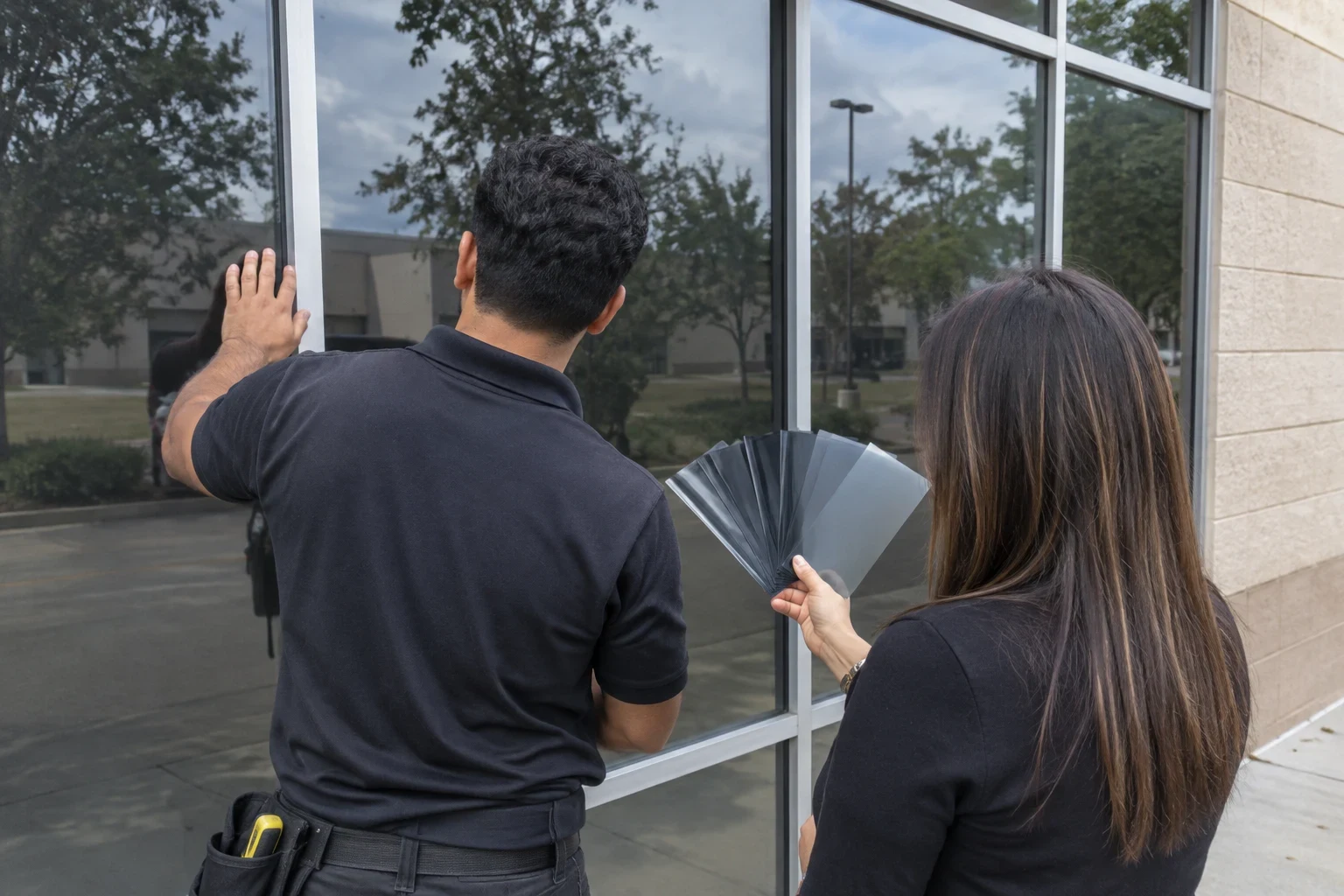
- We tape sample pieces right onto your panes. You walk inside, then step out to the parking lot, and judge the darkness and mirror look for yourself. A brochure photo never tells you how film looks in your light.
- Written, line-item estimate
- You get the square footage, the film, any old film removal and any extra labor spelled out. No lump number you have to guess at.
- Old film removal
- Peeling, bubbled or purple film comes off first, along with the adhesive. Skipping that step makes the new film fail early.
- Clean install and cleanup
- We cover floors and displays near the glass, trim the film to a tight edge, and haul off the scraps. Your space is ready to open when we leave.
Signs your business could use window film
Hot spots near the glass
Staff or customers avoid one side of the room every afternoon. The thermostat says one thing and the front counter feels another.
Faded merchandise or fixtures
Labels, fabric and wood near the windows lose color. UV is doing most of that, and film blocks nearly all of it.
Glare on screens
Point-of-sale screens, monitors or TVs are hard to read at certain hours. People keep closing blinds that hide your storefront.
Old film that looks rough
Bubbles, peeling corners or a purple tint tell customers the place is not cared for. That film has stopped working anyway.
Storm or break-in damage
A cracked pane with film on it needs both glass and film work. We document it so your claim paperwork has clear photos and numbers.
How a commercial install runs
- 1
Phone call and site visit
You call, we set a time to see the building. We measure, check the glass and show film samples in your actual light.
- 2
Estimate and scheduling
You get a written estimate. We plan the install around your hours, including early mornings or after close if foot traffic is an issue.
- 3
Prep and install
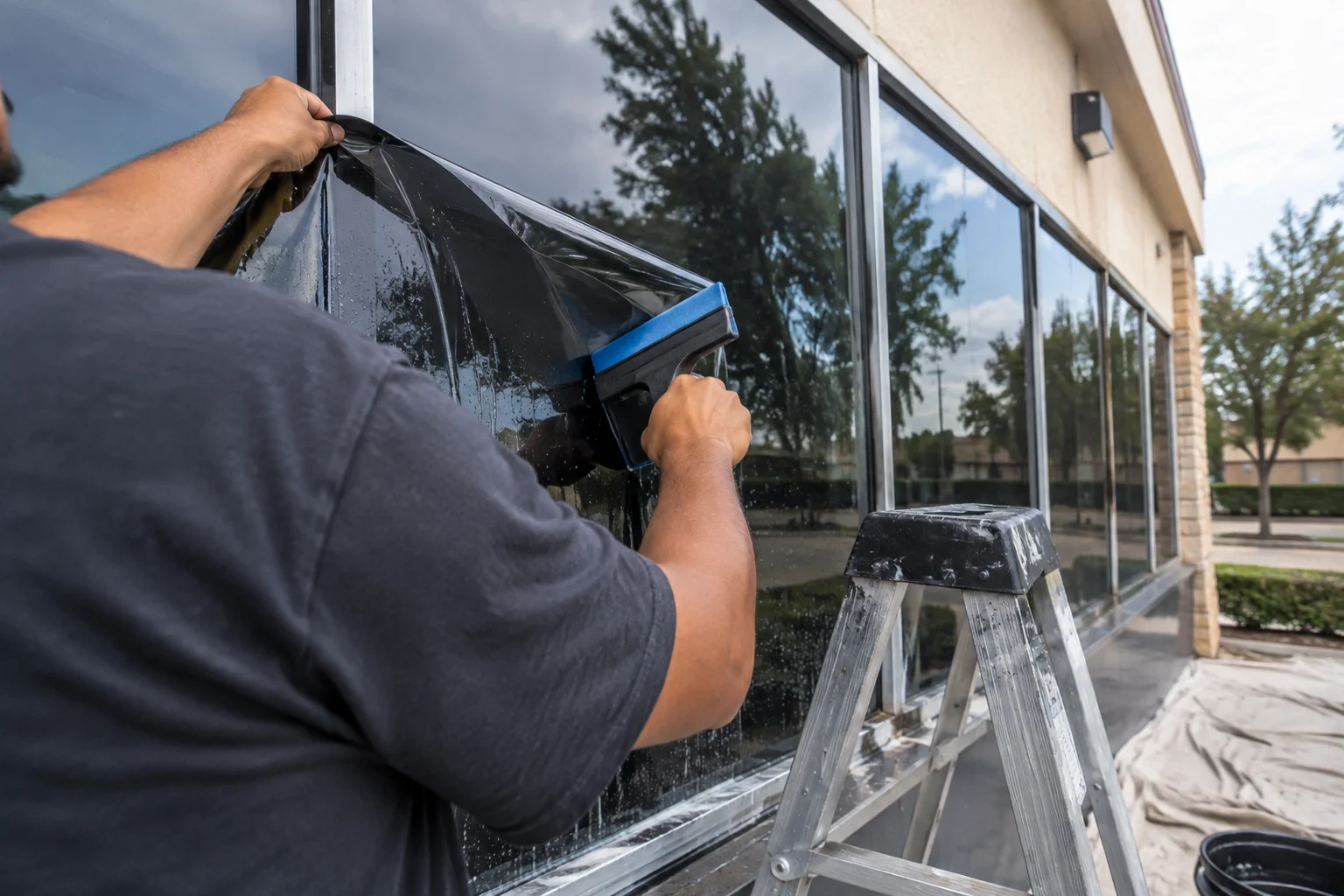
We clear and protect the area, scrape and clean each pane, then apply the film with a slip solution and squeegee it down. Edges are trimmed just short of the frame so the film sits flat.
- 4
Curing and care
Some haze or small water pockets are normal for the first days while the film dries out. We tell you how long to wait before cleaning and what to clean with so you do not scratch it.
What sets the price
Commercial jobs are priced mostly by how much glass there is and what film goes on it. Access and timing matter too. Your estimate breaks each piece out so you can see where the money goes.
- Square footage of glass
- More glass means more film and more labor. Lots of small panes in a divided storefront take longer per foot than a few large ones.
- Type of film
- Ceramic film rejects heat with less darkness and costs more. Reflective and non-reflective dyed films sit at different points, and security film is thicker and priced on its own.
- Height and access
- Transoms and second-story glass may need ladders or a lift. Shelving or displays against the glass add time.
- Removing old film
- Stripping baked-on film and adhesive is slow work and is priced as its own line.
- After-hours work
- Installing outside your business hours keeps you open but can change scheduling and labor.
Commercial window tinting questions
Something not covered here? (281) 824-1833
Can you install while we stay open?
Often, yes. We work one section at a time and keep the area roped off. For busy entrances or tight retail floors, we can schedule before you open or after you close.
Will the film make my storefront look dark from outside?
It depends on the film. Some films keep the glass close to clear and still cut heat well. We show samples on your windows so you can see the look from the sidewalk before you choose.
Is film safe on our dual-pane windows?
Usually, but not every film suits every insulated unit. Darker films absorb more heat, which can stress some glass. We check the glass type and pick a film that fits it.
Our film-covered window was broken in a storm. Can you help with the claim?
We can photograph the damage, note what film was on the glass, and give you a line-item estimate to send your insurer. We explain what adjusters usually want to see. We cannot promise what your policy covers, and we do not act as your adjuster.
Do you also do office interiors?
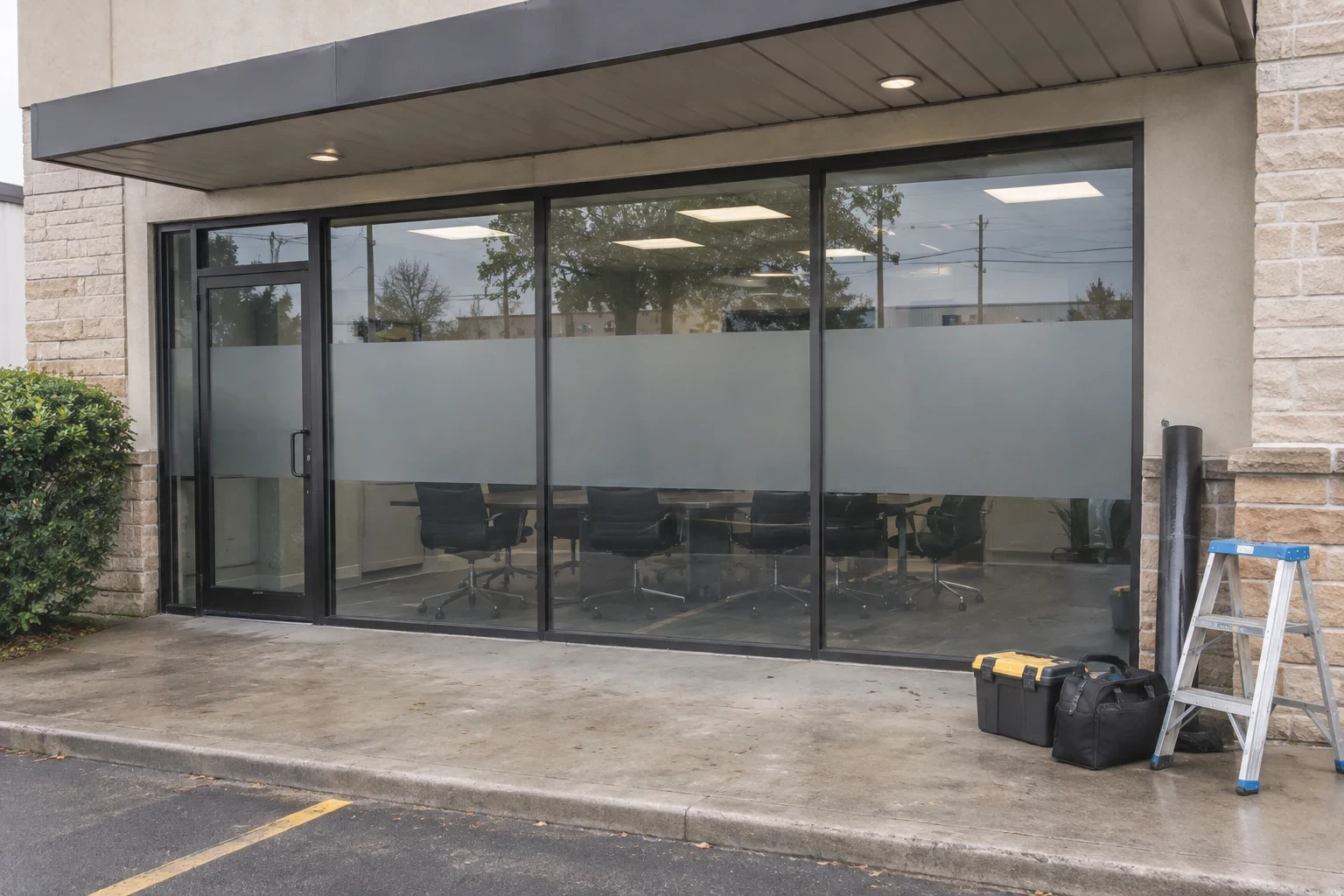
Yes. Conference room glass, glass partitions and interior doors are covered on our office window tinting page, and frosted looks are on decorative window tinting.
Let us look at your glass
We will come out, check the windows and show you films in your own light. You get a written estimate before any work is scheduled.