ServicesSecurity Window Film
Security Window Film in Katy
Security film is a thick, clear layer applied to the inside of your glass. When the pane breaks, the shards stay stuck to the film instead of falling in. It buys time against a break-in and keeps a cracked window in one piece until it can be replaced.
What security film does, and what it doesn't
Regular window tint is thin and made for heat and glare. Security film is much thicker, usually measured in mils, and built to hold glass together under impact. A rock, a pry bar or storm debris can still crack the pane. The difference is that the glass stays in the opening instead of landing on your floor.
We tell people straight up: no film makes a window unbreakable. What it does is slow someone down. A smash-and-grab that takes two seconds on bare glass can take a lot longer through film, and most people trying it give up or get noticed.
It also helps after something goes wrong. A window held together by film is easier to photograph, easier to show an adjuster and safer to live with until the glass company comes out. We help you keep good records of the install so you have them if you ever file a claim.
What's included with every security film job
A look at your glass first
We check each window for glass type, size and any seal failure. Some dual-pane units don't do well with heavy film, and we'll tell you which ones before anything goes up.
The right film thickness
Ground-floor doors and sidelights usually get a thicker film than upstairs bedroom windows. We match the mil rating to the risk at each opening instead of putting the heaviest film everywhere.
Edge attachment where it counts
On doors and easy-reach windows we can anchor the film to the frame with a structural sealant. That keeps the whole sheet of broken glass from pushing in as one piece.
Clean, careful install
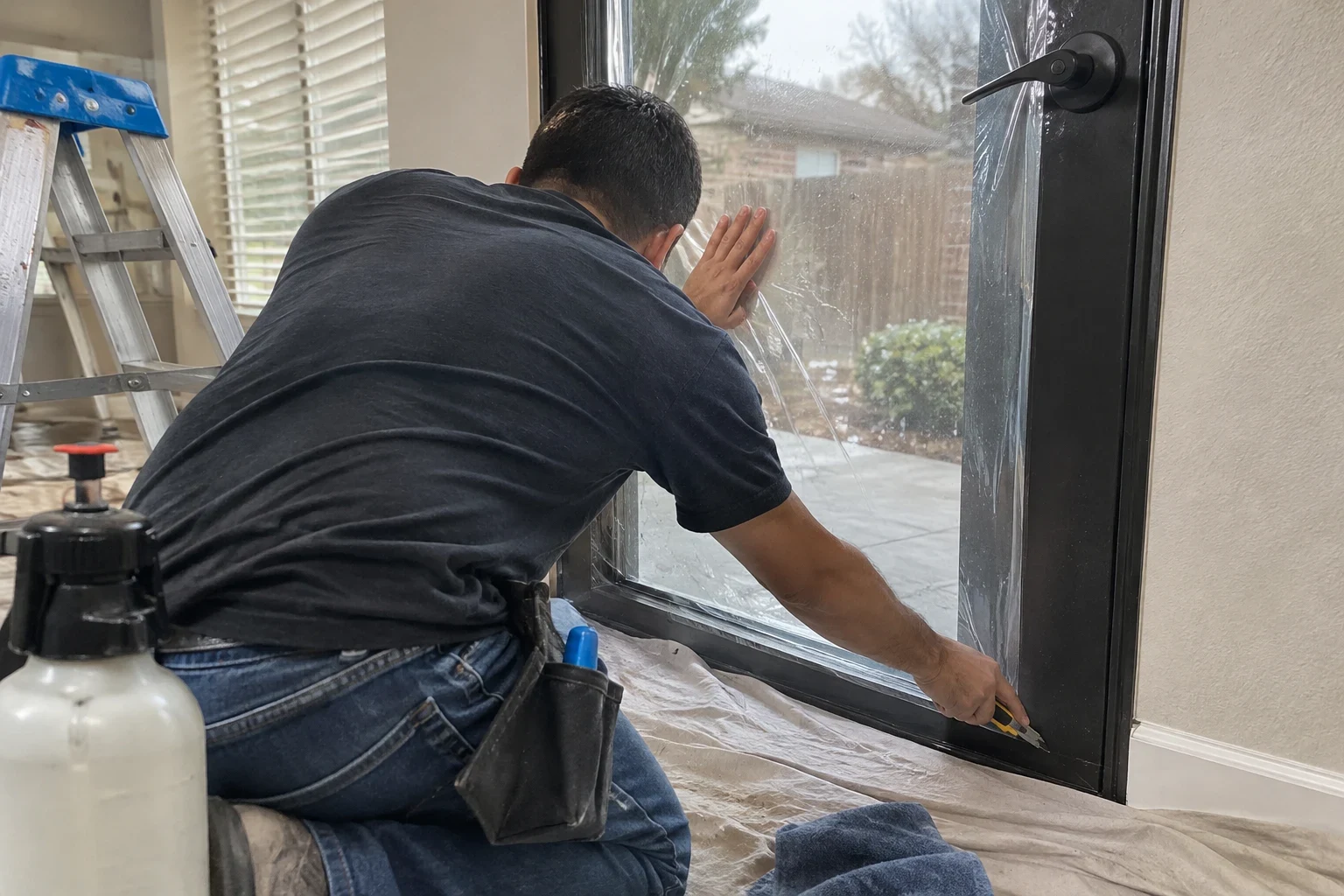
We lay down drop cloths, move what needs moving and scrape the glass clean before the film goes on. You won't find adhesive or trimmings left behind.
Records for your files
You get before-and-after photos, the film product name and a written invoice listing each window we treated. Keep it with your homeowner's or business policy papers.
Signs security film makes sense for you
Glass next to the door lock
Sidelights and glass panels in or beside a front door are the usual way in. Break the glass, reach through, turn the deadbolt. Film makes that reach much harder.
A break-in nearby
If a neighbor or the shop next door just had a window smashed, it's a fair time to look at your own ground-floor glass.
Big windows facing a storm
Tall living room windows and storefront glass take the brunt of wind-blown debris during Gulf storm season. Film helps keep shards from spraying across the room if a pane cracks.
Kids or pets near low glass
Floor-level windows and glass doors get bumped. Film keeps a broken pane from turning into sharp pieces on the floor.
A past claim you had trouble documenting
If you've been through a claim and wished you had better records of your windows, starting with a documented install puts you in a better spot next time.
How the job goes on install day
- 1
Free quote by phone, then a walk-through
You call, tell us which windows worry you, and we set a time to come look. We measure, check the glass and give you a written quote by window.
- 2
Prep the room
We cover floors and sills and pull blinds where needed. Each pane gets scraped and washed so nothing is trapped under the film.
- 3
Apply and squeegee
Film goes on wet, gets positioned and is pressed out from the center. Thick film takes more work to set than tint, so we take our time on each pane.
- 4
Anchor and photograph
Where edge attachment is part of the job, the sealant goes on last. We photograph every finished window and go over the cure time with you before we leave.
What moves the price of security film
Security film costs more than standard tint because the material is thicker and slower to install. The final number comes down to your windows and how much protection each one needs. We break it out line by line so you can see where it goes.
- Film thickness
- Thicker film costs more per square foot and takes longer to set. Not every window needs the heaviest grade.
- Edge attachment
- Anchoring film to the frame adds material and labor. It's usually worth it on doors and ground-floor glass and often skipped upstairs.
- Window size and reach
- Large panes and high windows need more film, a second set of hands or ladders. Small panes with grids take more trimming time.
- Old film or residue
- If there's tired tint on the glass now, it has to come off clean first. That adds time before the new film goes on.
Security window film questions
Something not covered here? (281) 824-1833
Will security film stop someone from getting in?
No film stops a determined person forever. It slows them down, often by enough that they quit or draw attention. Pair it with good locks and lighting for the best result.
Does security film lower my insurance premium?
Sometimes, but we can't promise it. Some insurers give credit for protective upgrades and many don't. Call your agent, and we'll give you the paperwork they ask for, like the product name and invoice.
If a window breaks, will my insurance cover it?
That depends on your policy and your adjuster, not on us. What we can do is help you document it. Take photos before anything is cleaned up, and we can point out whether the film held and what failed.
Is security film hurricane protection?
Not on its own. Film helps hold cracked glass together and cuts down on flying shards, but it isn't a substitute for rated shutters or impact windows. We'd rather say that now than have you count on it later.
Can I see out the way I do now?
Yes. Clear security film looks like plain glass once it cures. If you also want heat rejection or privacy, there are tinted versions, and we can talk through ceramic window film or privacy window tinting on the same visit.
How long before I can clean the windows?
Give it about 30 days to cure fully before washing the inside. A little haze or small water pockets can show up in the first days and clear out as the film dries.
Let's look at your weak spots
Tell us which doors and windows bother you. We'll come out, check the glass and give you a written breakdown by window.